
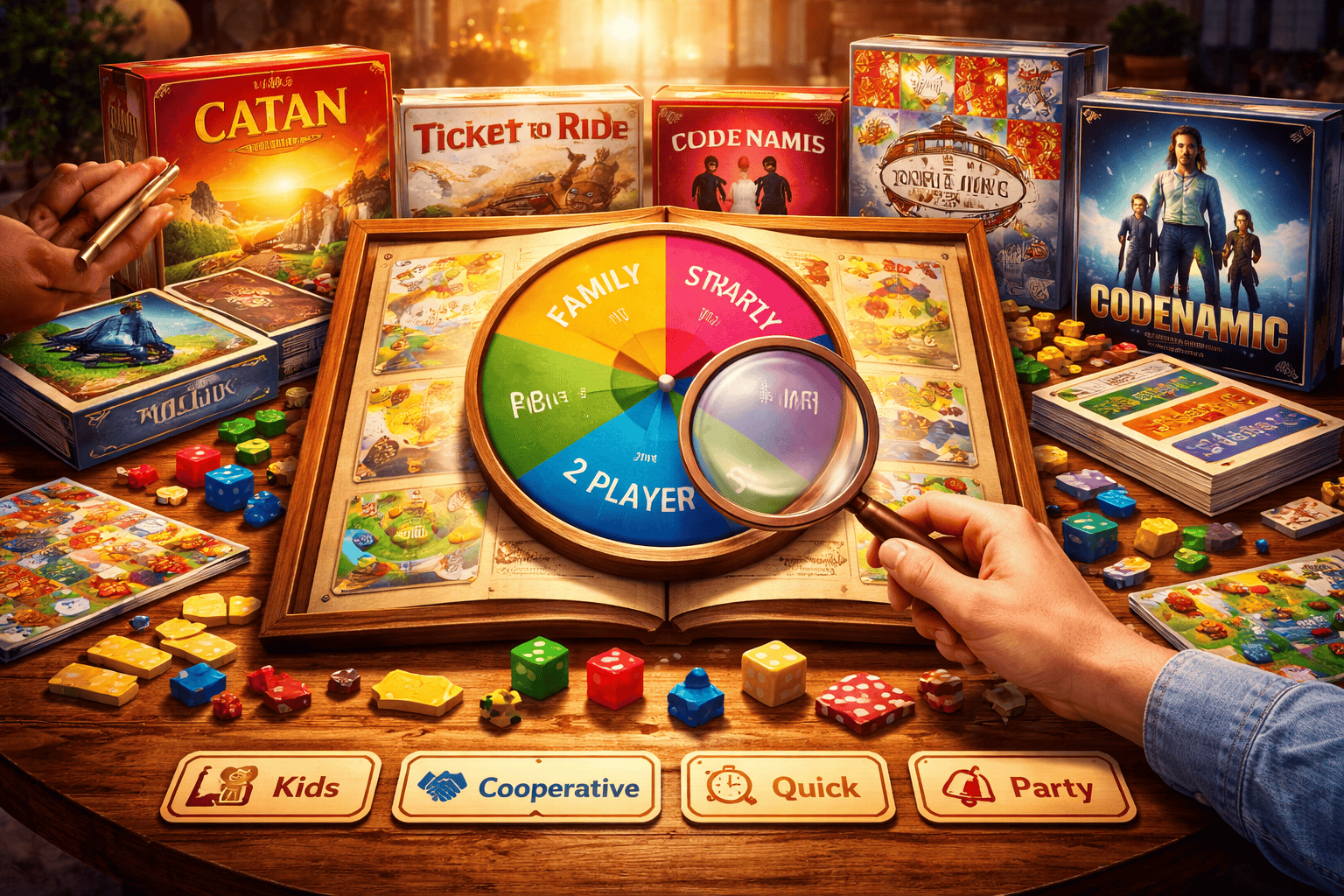
How to Choose the Perfect Board Game for Any Occasion
With so many board games available today, picking the right one can feel overwhelming—especially when every occasion calls for something different. A game that works perfectly for a family night might fall flat at a party, while a deep strategy game could be too much for casual players.
The good news? Choosing the perfect board game becomes easy once you know what to look for.
1. Consider the Occasion
The first step is understanding why you’re playing.
- Family Night → Choose something inclusive, easy to learn, and suitable for all ages
- Party or Gathering → Go for fast-paced, social games with lots of interaction
- Date Night → Look for two-player games with engaging mechanics
- Game Night with Friends → Strategy or competitive games work well here
Matching the game to the occasion ensures everyone stays engaged and has fun.
2. Think About the Players
Not all games fit all groups. Consider:
- Number of players – Some games shine with 2 players, others need 5+
- Experience level – Beginners need simple rules; experienced players may enjoy complexity
- Age range – Make sure the game is appropriate for everyone involved
For example, games like Codenames are great for groups, while Azul works well even with just two players.
3. Check the Playtime
Time matters more than you think.
- Under 30 minutes → Perfect for casual sessions or warm-ups
- 30–60 minutes → Ideal for most game nights
- 1–2 hours → Better for dedicated players
If people are tired or short on time, a long game can quickly lose attention.
4. Choose the Right Complexity Level
Every game has a “weight” or difficulty level.
- Light games – Easy rules, quick decisions (great for beginners)
- Medium games – More strategy, but still accessible
- Heavy games – Deep mechanics, longer learning curve
If you’re unsure, start lighter. Games like Ticket to Ride offer a perfect balance between simplicity and strategy.
5. Match the Mood
The vibe of the group plays a big role.
- Want something fun and loud? → Party games
- Prefer relaxed and thoughtful? → Puzzle or strategy games
- Looking for creative expression? → Storytelling games like Dixit
A mismatch in mood can make even a great game feel boring.
6. Replayability Matters
A good board game should stay fun after multiple plays. Look for:
- Different strategies each time
- Random elements (cards, dice, setups)
- Player interaction
Games like Catan remain interesting because every session feels different.
7. Don’t Forget Practical Details
Before buying or choosing a game, think about:
- Setup time – Some games take longer to prepare than to play
- Table space – Bigger games need more room
- Portability – Smaller games are great for travel
These small factors can make a big difference in real-life situations.
Final Thoughts
Choosing the perfect board game isn’t about finding “the best” game—it’s about finding the right game for the moment.
To recap, always consider:
- The occasion
- The players
- Time and complexity
- The mood you want to create
When all these elements align, even a simple game can turn into a memorable experience.
If you’d like, I can suggest specific games for your store’s audience or different scenarios (families, parties, couples, etc.).
