
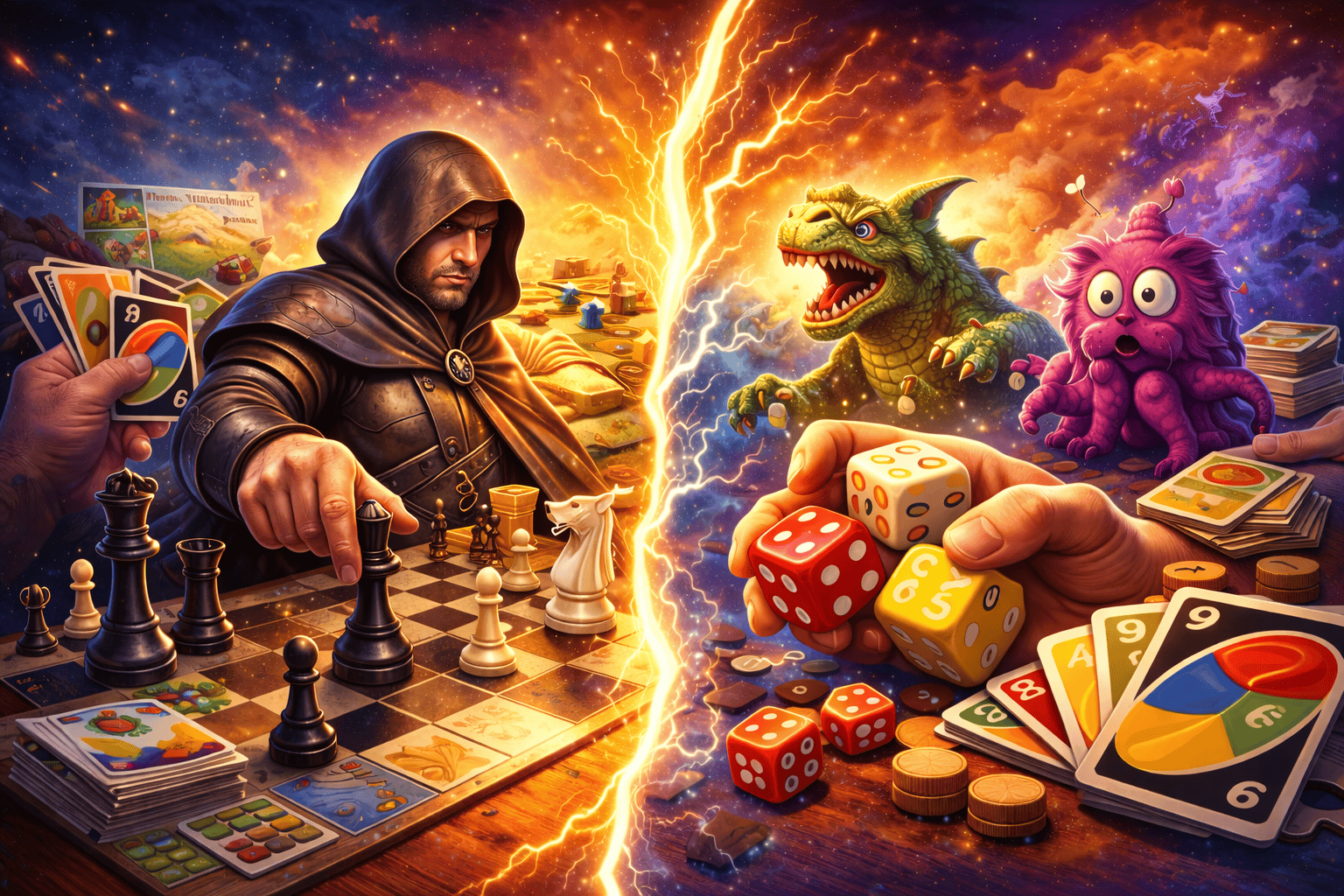
Strategy vs. Luck: What Makes a Great Board Game?
One of the most common debates in the board gaming world is simple: what matters more—strategy or luck? Some players love carefully planning every move, while others enjoy the thrill of unpredictable outcomes. But the truth is, the best board games don’t rely entirely on one or the other—they strike the right balance between both.
Let’s break down how strategy and luck work, and why their combination often creates the most memorable experiences.
What Is Strategy in Board Games?
Strategy refers to player decisions that directly influence the outcome of the game. These are moments where skill, planning, and foresight matter.
Games focused on strategy usually include:
- Long-term planning
- Resource management
- Tactical decision-making
- Minimal randomness
For example, Chess is purely strategic—there’s no luck involved at all. Every move depends entirely on the players.
Other popular strategy-heavy games include Catan and Azul, where smart decisions often lead to victory.
Why players love strategy games:
- They reward skill and improvement
- Every game feels like a mental challenge
- Winning feels earned
What Is Luck in Board Games?
Luck (or randomness) comes from elements that players cannot fully control, such as dice rolls, shuffled cards, or random events.
Games with strong luck elements often feature:
- Dice rolling
- Card draws
- Random setups
- Unexpected twists
A great example is Uno, where the cards you draw can completely change the outcome.
Another example is Camel Up, where unpredictable races create exciting and often hilarious moments.
Why players enjoy luck-based games:
- They’re accessible to everyone
- Beginners can compete with experienced players
- Every game feels different and surprising
Finding the Perfect Balance
The most successful board games combine both elements. Too much strategy can feel overwhelming or slow, while too much luck can feel unfair or random.
Balanced games allow players to:
- Make meaningful decisions
- Adapt to unexpected situations
- Feel in control—but not fully certain of the outcome
For example:
- Ticket to Ride mixes planning with card-draw randomness
- King of Tokyo blends luck (dice) with strategic choices
This balance keeps games exciting while still rewarding smart play.
Which Is Better for Different Players?
Different groups prefer different mixes:
- Families & casual players → More luck, less complexity
- Competitive players → More strategy, less randomness
- Mixed groups → Balanced games work best
Understanding your audience helps you choose the right type of game for any situation.
Replayability and Fun
Interestingly, luck often increases replay value. Even if players make similar decisions, random elements ensure that no two games are exactly the same.
Strategy, on the other hand, provides depth—players can improve over time and discover new tactics.
The best games offer both:
- Enough strategy to stay interesting
- Enough luck to stay unpredictable
Final Thoughts
So, what makes a great board game—strategy or luck?
The answer is both.
A great game gives players meaningful choices while still leaving room for surprises. It challenges the mind without becoming stressful, and it stays fun whether you win or lose.
In the end, the perfect balance depends on the players—but when strategy and luck work together, that’s when board games truly shine.
